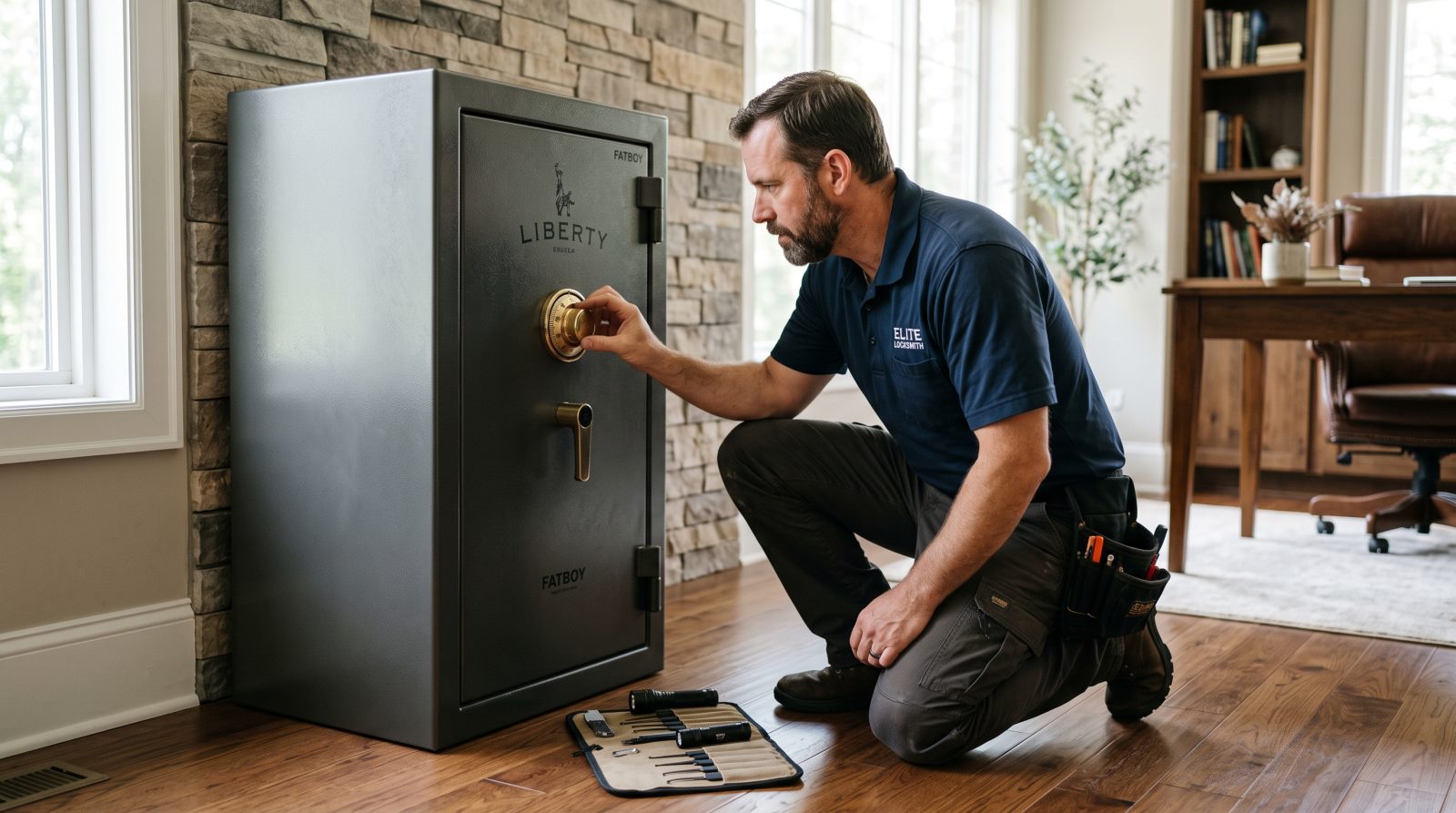
What does a safe locksmith do?
A safe locksmith focuses specifically on safes and vault-type containers rather than door hardware, though many locksmiths handle both. The core jobs fall into three buckets: getting a safe open when access is lost, repairing the lock or mechanism after it fails, and changing or resetting the combination so the owner controls who can get in.
Safes use different lock styles, and the right technique depends on which one your safe has. Knowing your lock type helps a technician estimate the work before arriving.
- Mechanical dial locks: the rotating dial with a three-number combination, common on older safes and many gun safes.
- Electronic keypad locks: battery-powered digital locks where you punch in a code; the most common failure is dead batteries, not a broken lock.
- Biometric locks: fingerprint readers, often paired with a backup keypad or key override.
- Key locks and dual-control locks: a physical key, sometimes combined with a dial or keypad for added control.
- Time locks and high-security commercial locks: found in retail, jewelry, and banking safes, which require specialized handling.
How does safe opening work without destroying the safe?
Non-destructive entry is almost always the first goal because it preserves the safe so you can keep using it. The simplest fixes come first: on electronic safes, replacing dead batteries restores power and the keypad frequently works again, since a flat battery is one of the most common reasons a keypad safe stops responding. Many keypad and biometric models also have a backup key override, so locating that key can solve the problem in minutes.
When the combination is simply forgotten, a technician may recover it through the manufacturer using the safe's serial number and proof of ownership, or open a mechanical dial through skilled manipulation that leaves the lock intact. These methods take patience but avoid any damage.
We do not publish techniques for defeating locks, and a reputable safe locksmith verifies that you own or are authorized to access the safe before any work begins. Expect to show ID and proof of ownership.
When is drilling necessary, and is the safe ruined?
Drilling is a controlled, last-resort method used when non-destructive entry is not possible, such as a failed or seized lock, a relocker that has tripped, or a lost combination on a unit that cannot be manipulated. It is precise work aimed at a specific point so the safe can be opened and then put back into service, not a matter of cutting the safe apart.
After a drilled entry, the safe is usually repairable. The technician replaces the damaged lock with a new one and repairs the drilled access point so the container is sound and secure again. In most cases you keep the same safe rather than buying a new one.
Because drilling permanently alters the lock and requires repair afterward, technicians treat it as the option of last choice. A good provider will explain why drilling is needed for your specific situation before doing it.
Safe repair and combination changes
Repair covers safes that open but do not work right: a dial that slips or sticks, a bolt that will not retract or extend fully, a keypad that misreads codes, a door that sags or binds, or a relocker that has been triggered. A technician diagnoses whether the issue is the lock, the boltwork, or the door alignment, then services or replaces the affected part.
Combination changes are one of the most requested safe services. You should change a safe's combination when you buy a used safe with an unknown or shared code, move into a property where others knew the code, lose track of who has access, or simply want a fresh code on a schedule. The mechanics differ by lock type.
On a mechanical dial lock, changing the combination requires a change key and access to the back of the lock, which is why it is typically done by a technician rather than the owner. On an electronic keypad, the owner can often reset the user code following the manual, but a technician can reset a locked-out unit, set up multiple user codes, or replace a failed keypad entirely. Whichever method applies, the goal is the same: old codes stop working and only the people you choose can open the safe.
How much does safe locksmith service cost?
The figures below are typical industry ranges to help you budget; they are estimates, not quotes. Actual pricing depends on your safe's brand and security rating, the lock type, the condition of the mechanism, whether non-destructive entry is possible, your location, and parts. A safe locksmith should give you a price after assessing the specific unit.
Several factors push cost up or down: a high-security or fire-rated safe with hardened plates and relockers takes more time than a basic home safe; a simple battery swap or code reset is at the low end; a drilled opening that also needs a new lock and repair sits at the higher end. Ask whether the estimate includes a service-call or trip charge and the cost of any replacement lock.
- Battery replacement or backup-key opening on an electronic safe: typically the lowest-cost visit, sometimes a flat service-call fee.
- Non-destructive opening or combination recovery: a moderate range that reflects the time and skill involved.
- Combination change or electronic lock reset: a moderate range, higher if a new lock or keypad is installed.
- Drilled opening plus lock replacement and repair: typically the highest range because it combines entry, parts, and repair.
- High-security, commercial, or fire-rated safes: generally priced above standard home safes due to construction and time.
What to do before you call about a locked safe
A few minutes of prep makes the visit faster and the estimate more accurate. Gather what you can about the safe and the situation so the technician arrives ready with the right tools and parts.
Most importantly, avoid repeated wrong entries or forcing the mechanism. Some electronic safes go into a lockout or penalty-delay mode after several incorrect codes, and forcing a dial or bolt can cause additional damage that raises the repair cost.
- Note the brand and model, usually on the door, inside the door, or on the original paperwork.
- Identify the lock type: dial, keypad, biometric, or key.
- For electronic safes, try fresh batteries first and check for a backup override key.
- Have proof of ownership and ID ready, since a technician will verify authorization before opening.
- Describe the problem clearly, such as dead keypad, forgotten combination, jammed bolt, or unknown code on a used safe, when you request a quote.
Gun Safe Locksmith
Locked out of a gun safe, or need an electronic keypad reset or dial combination change? Our gun safe locksmith service opens and services home gun safes without destroying them wherever possible. Mobile service across Santa Clara & San Mateo County - San Jose, Sunnyvale, Santa Clara, Mountain View, Palo Alto, Redwood City, San Mateo, Daly City. Call (877) 300-2747.