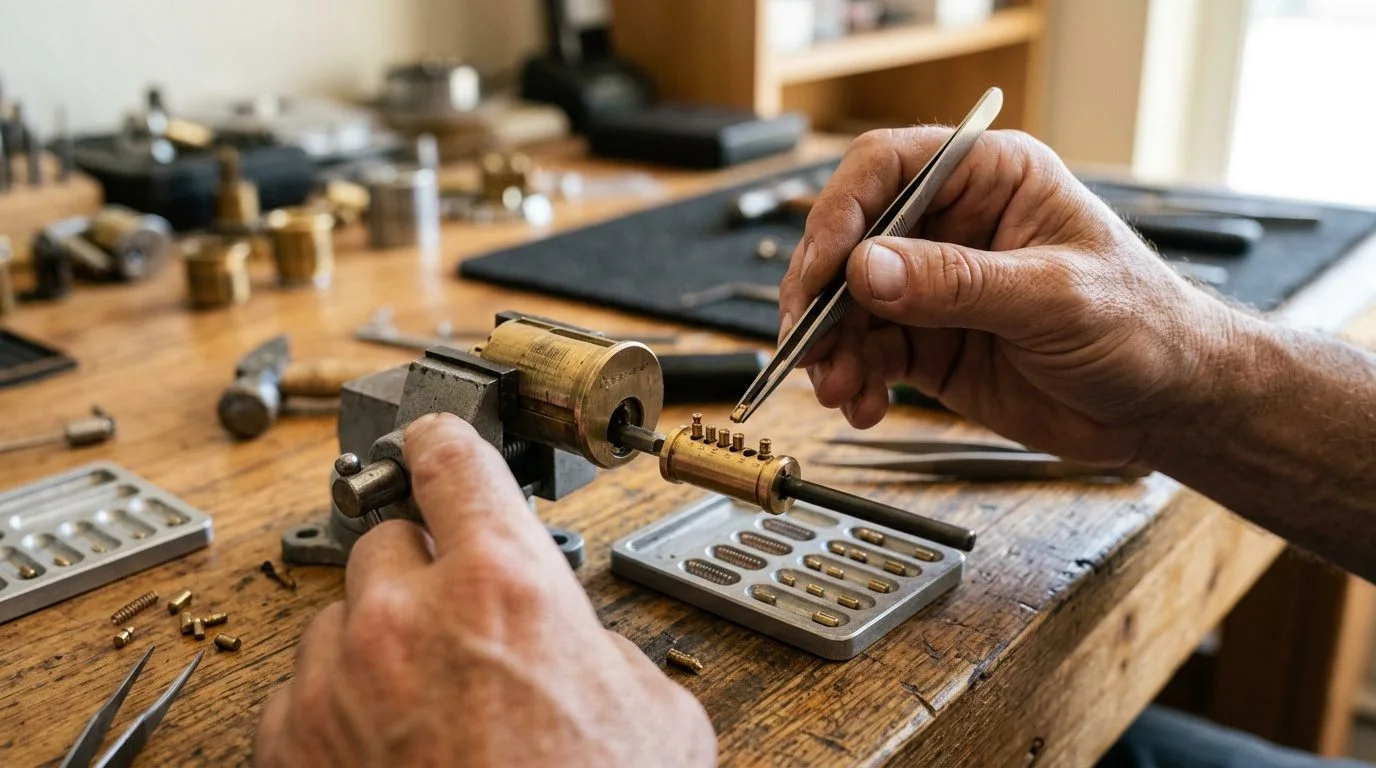
What affects the price to rekey locks?
Rekey cost is typically shaped by cylinder compatibility, how many cylinders need to be rekeyed, the condition of the lock, whether a working key is available, and the general labor involved to access, reconfigure the cylinder's internal keying, and test the cylinder.
Key factors that shape lock rekey cost
Cylinder compatibility
Compatibility is a starting point for any rekey estimate. A locksmith may need to confirm whether your existing cylinder can be rekeyed to the key you want to use. Keyways and internal designs can differ by brand and model, even when locks look similar from the outside.
If a cylinder isn't compatible with the keying plan you want, that can change what options are practical — and it can affect the overall estimate.
Number of cylinders (not just doors)
Rekey work is usually counted by cylinders. One door may have more than one cylinder (for example, a deadbolt plus a keyed knob or lever). More cylinders generally mean more parts to disassemble, reconfigure the cylinder's internal keying, and test.
Lock condition
Lock condition can influence the amount of labor involved. A cylinder that turns smoothly is often more straightforward to rekey than one that is corroded, sticky, worn, loose, or hard to rotate. If the lock has mechanical problems, extra inspection or adjustments may be needed before a rekey can be completed.
Key availability
Whether you have a working key for each cylinder can affect the estimate. When keys are missing or don't operate the lock reliably, additional labor may be required before the cylinder can be rekeyed and tested.
Labor and complexity
General labor includes accessing the cylinder, disassembling the hardware, reconfiguring the cylinder's internal keying, reassembling, and verifying smooth operation. Complexity can increase with unusual trim, older hardware, added security features, painted-over parts, or installations that make the cylinder harder to remove and service.
Keying alike (one key for multiple locks)
Keying alike means setting multiple compatible cylinders to work with the same key. This can add planning and testing, and it depends on the cylinders sharing compatible keyways and keying requirements.
Questions to get a clearer estimate
How many cylinders need to be rekeyed (deadbolts, knobs/levers, garage/side doors, interior keyed locks)?
Do you have a working key for each cylinder right now?
Do you want the cylinders keyed alike (one key), or do some need to stay on separate keys?
Are any locks sticking, binding, spinning, or difficult to turn?
Do you know the lock brand or model, or can you share clear photos of the lock and key?
Are any locks painted over, corroded, loose, or otherwise hard to access?
Rekeying compared with changing locks
Rekeying changes the key that operates a compatible cylinder. Changing locks replaces hardware. If you’re also researching replacement scenarios, see lock change cost.
Contact to confirm availability
Contact Locksmith Near Me to confirm availability and share the details above (cylinder count, key situation, lock condition, and whether you want locks keyed alike). That information helps narrow what may be involved for your specific rekey estimate.