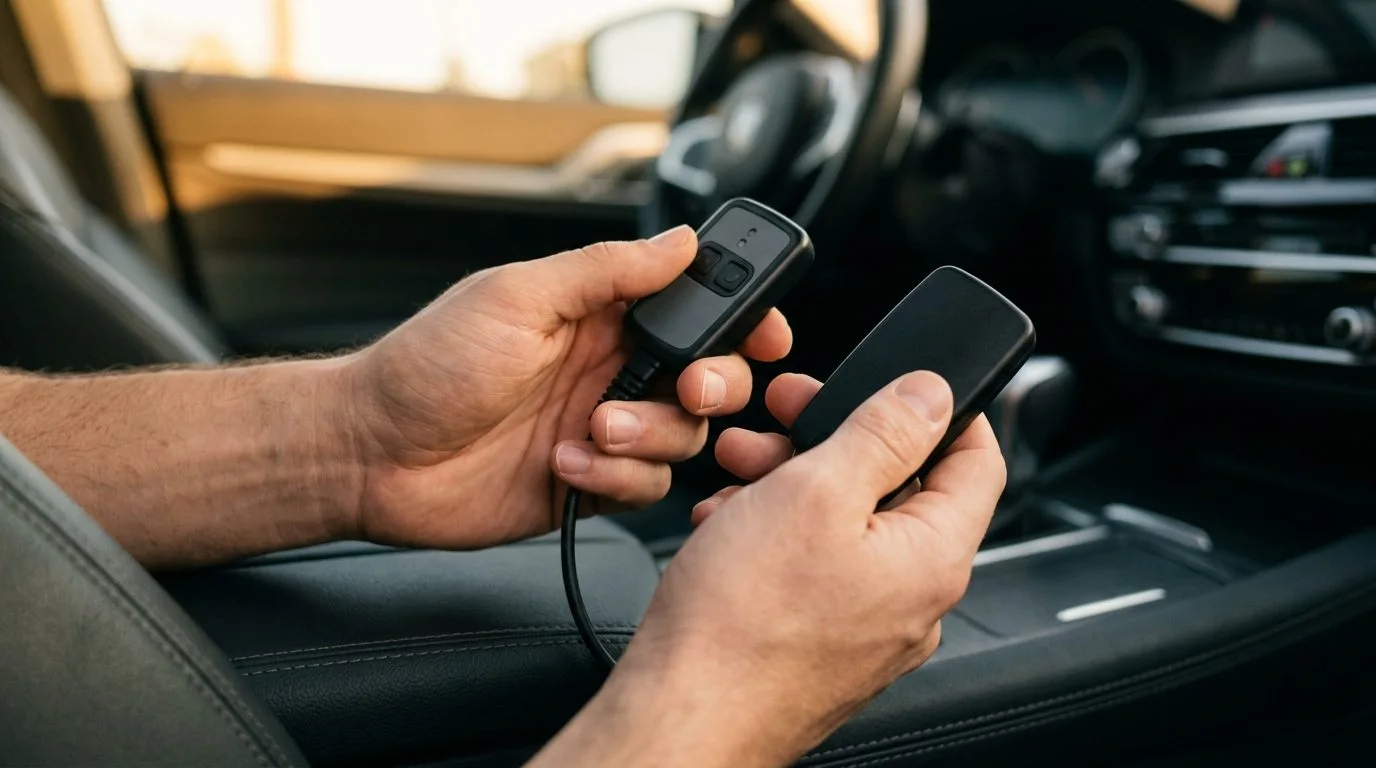
What does car key fob programming and replacement actually involve?
A key fob is the small remote you press to lock, unlock, or remotely start your vehicle. On most cars built in the last two decades, the fob also carries a transponder chip and, in keyless-entry vehicles, a proximity sensor that lets the car start when the fob is nearby. Because all of these talk to your vehicle's immobilizer system, a fob has to be electronically programmed to your specific car before it will work, even if the physical buttons and battery are fine.
Replacement is the physical side: sourcing the correct fob shell, key blade, or smart-key unit that matches your make, model, and year. Programming is the electronic side: syncing that fob to your car so the immobilizer recognizes it. Many jobs need both, for example when a fob is lost entirely. Some jobs need only programming, such as activating a spare fob you already bought, and some need only mechanical work, such as cutting a fresh emergency key blade.
A mobile locksmith typically diagnoses which parts of the job apply, confirms the fob type your vehicle uses, and completes the work on site. Sharing your year, make, and model when you request a quote helps confirm what your car needs before anyone arrives.
- Standard remote fobs that lock, unlock, and sometimes remote-start
- Transponder keys with a chip embedded in the head
- Proximity smart keys for push-to-start, keyless-entry vehicles
- Flip keys and switchblade-style remote head keys
- Spare or backup fob programming for keys you already own
How does a locksmith program a key fob to your car?
The process starts with identifying the exact fob your vehicle uses, since a 2014 model and a 2019 version of the same car can take completely different remotes. From there, the locksmith pairs the fob to your vehicle's onboard computer using diagnostic equipment that communicates with the immobilizer system. Once programmed, the car learns to accept that fob's unique signal.
For lost-key situations where no working fob remains, the job is more involved than adding a spare, because the system has to register a brand-new credential from scratch. Some vehicles also enforce a built-in security wait time before a new key can be added, which can extend how long the appointment takes. A reputable locksmith will explain this up front rather than leaving you guessing.
Programming an extra fob when you still have one working key is usually quicker. The existing key often helps the vehicle accept the new one. In every case, the fob is tested on the actual car, locking, unlocking, and starting it, before the job is considered complete.
- Confirm the precise fob part and chip type for your year, make, and model
- Source or supply the correct replacement fob or smart key
- Sync the fob to the vehicle's immobilizer and remote system
- Account for any manufacturer security delay on all-keys-lost jobs
- Test every function on the vehicle before finishing
What does key fob replacement typically cost?
Pricing depends heavily on your vehicle and the fob technology it uses, so the figures below are typical industry estimate ranges, not quotes for your specific car. A basic transponder key or simple remote is usually the most affordable option. Proximity smart keys for push-to-start vehicles cost more because the hardware itself is more expensive and the programming is more complex. Luxury and European models often sit at the higher end.
As a general guide, many basic transponder keys fall in roughly the 120 to 250 dollar range once cut and programmed, standard remote fobs commonly land around 150 to 350 dollars, and proximity smart keys frequently run from about 250 to 500 dollars or more. All-keys-lost jobs tend to cost more than adding a spare because of the extra time and security steps involved. Your actual price can land outside these ranges depending on the make, model, and parts.
The honest comparison is value, not just sticker price. Programming a spare now is almost always cheaper than an emergency all-keys-lost call later. The most reliable way to know your number is to request a free quote with your vehicle details so the estimate reflects the real fob your car needs.
- Basic transponder key: roughly $120 to $250 (estimate)
- Standard remote fob: roughly $150 to $350 (estimate)
- Proximity smart key (push-to-start): roughly $250 to $500+ (estimate)
- All-keys-lost jobs usually cost more than programming a spare
- Luxury and European makes often sit at the higher end
Should you use a dealership, a hardware store, or a mobile locksmith?
You generally have three options for a new or replacement fob, and each fits a different situation. A dealership can supply factory fobs and is sometimes the only route for certain newer or specialty vehicles, but it often means towing the car in and waiting on parts. A big-box hardware store can copy some basic keys, but many lack the equipment to program transponder chips or smart keys, so the copy may open the door without ever starting the engine.
A mobile locksmith blends convenience with capability: the technician comes to your home, workplace, or wherever the car is parked, and handles both cutting and programming on the spot for most common makes. That on-site model is especially useful across the Bay Area, where parking a stranded car near a dealership and arranging a tow can be its own ordeal.
For a small number of very new or highly specialized vehicles, the dealership may still be the right call, and a trustworthy locksmith will tell you so instead of overpromising. When you request a quote, mention your year, make, and model so you get a straight answer about whether your car is a good fit for mobile service.
- Dealership: factory parts, sometimes required for newer or specialty models, but usually slower and tow-dependent
- Hardware store: fine for some basic copies, but often cannot program chips or smart keys
- Mobile locksmith: on-site cutting and programming for most common makes, no tow needed
How can you avoid a key fob emergency in the first place?
The single best safeguard is having a programmed spare. When every fob is lost at once, the job becomes more time-consuming and more expensive, so keeping a backup that is already synced to your car turns a potential crisis into a minor inconvenience. If you only have one working fob today, programming a second is a smart, low-stress move to make before something goes wrong.
Everyday care also extends a fob's life. Replace the small coin-cell battery when the range starts to drop or the dashboard warns of a weak key, keep the fob away from water and extreme heat, and avoid letting it ride loose with sharp objects that can crack the casing. A worn or water-damaged fob can fail intermittently long before it stops entirely, so early signs are worth acting on.
Store spares somewhere safe and known, not buried in a junk drawer you will forget under pressure. A little planning means that if a fob is ever lost or damaged, you already have a working backup and can request help with your vehicle details ready to go.
- Keep at least one programmed spare fob synced to your car
- Replace the fob battery when range drops or a weak-key warning appears
- Protect the fob from water, heat, and impacts that crack the case
- Store backup fobs somewhere safe and easy to remember