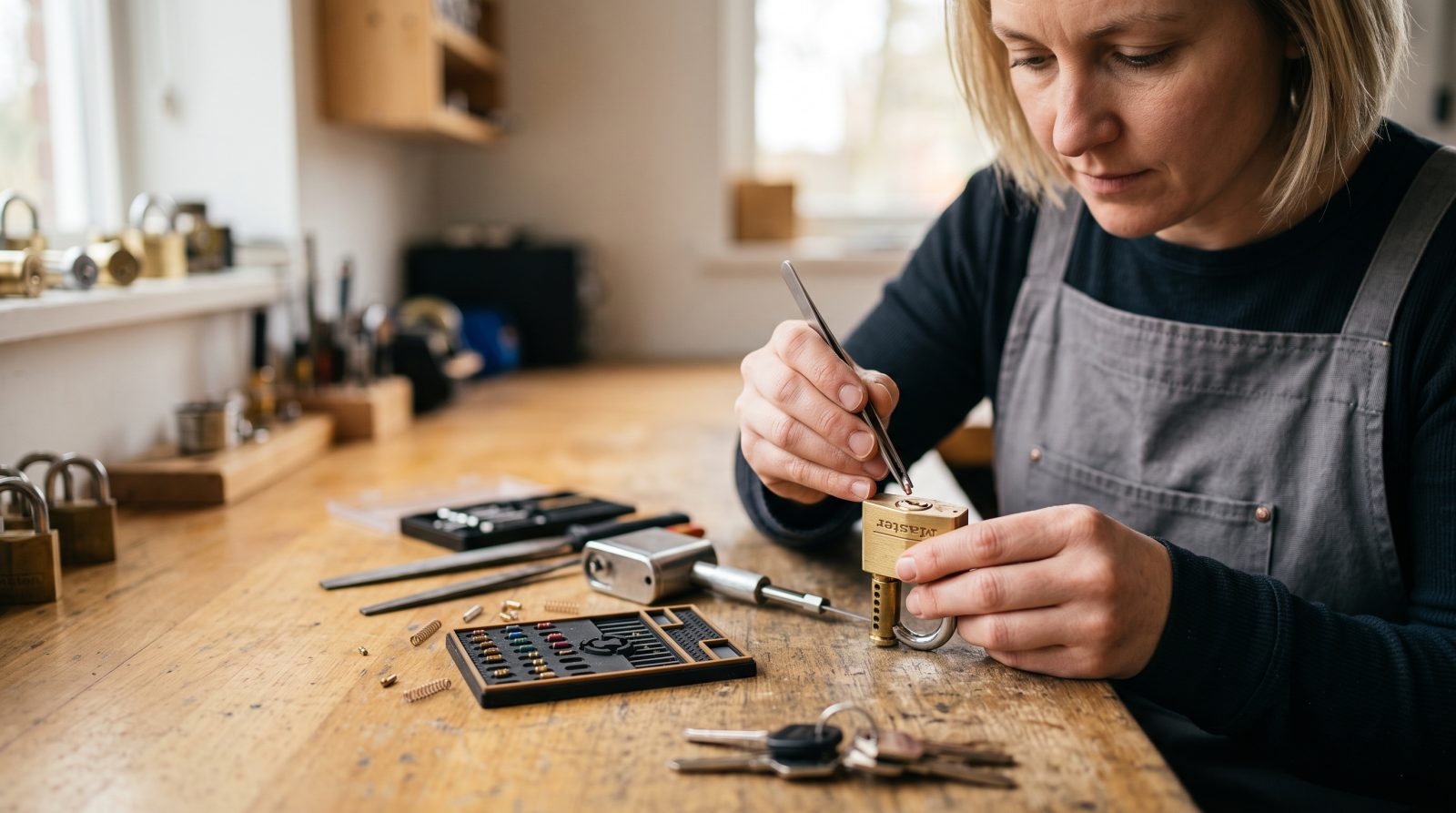
What is lock rekeying?
Rekeying is the process of resetting a lock cylinder so it accepts a different key. A locksmith opens the cylinder, removes the small spring-loaded pins inside, and swaps in a new set of pins sized to match a new key. Once the pins are changed, the lock works exactly as before, only now the original key no longer fits and the new key does. The lock body, deadbolt, latch, strike plate, and screws all stay on the door.
The mechanism this relies on is the pin tumbler, the most common residential lock design in the United States. Inside the cylinder, pairs of pins of varying heights sit between a fixed housing and a rotating plug. The correct key lifts each pin pair to a precise line called the shear line, which lets the plug turn. Rekeying simply substitutes a different combination of pin heights so a different cut pattern is needed to align the cylinder.
Because rekeying reuses your existing hardware, it does not change how the lock looks or how the door operates. It is a change to the lock's internal code, not to the lock itself. That distinction is what makes it faster and typically less expensive than replacing a lock outright.
When should you rekey instead of replace a lock?
Rekeying makes sense whenever the hardware is in good working condition but you no longer want certain keys to work. The most common reasons are control and cost: you keep the locks you already own and only change who can open them.
- You just moved into a home or rental and do not know how many copies of the old keys exist.
- You lost a key or had a wallet or purse stolen and want the missing key to stop working.
- A tenant, roommate, house guest, ex-partner, or former employee moved out or no longer needs access.
- A contractor, cleaner, dog walker, or real estate agent had temporary access during a project.
- You want several different locks (front door, back door, garage) to open with one single key, often called keying alike.
- Your locks function fine and are not damaged, worn, or outdated, so there is no need to buy new hardware.
Rekey vs. replace: how to choose
Choose rekeying when the goal is to invalidate old keys and the lock is mechanically sound. Choose replacement when the hardware itself is the problem or when you want a different type of lock. Both are routine locksmith services, and a technician can often do either on the same visit.
Replacement is the better path when a lock is sticking, corroded, damaged, or worn to the point of being unreliable, when you want to upgrade the security grade or finish, or when you are switching to a different style such as a smart lock or a keypad deadbolt. Rekeying cannot fix a failing lock or change its security rating; it only changes which key operates it.
A practical middle ground exists too. If you like your current locks but want one key for the whole house, rekeying multiple existing cylinders to a single key is usually cheaper than buying a matched set of new locks. If only one lock is failing, you can replace that one and rekey the rest to match it.
What does a lock rekey appointment involve?
A rekey visit is generally short and self-contained. After confirming which locks you want changed and that you are authorized to have the work done, the locksmith removes each cylinder, replaces the pins, cuts a fresh key to the new code, and reassembles the lock on the door.
Expect the locksmith to test the lock several times before finishing: the new key should turn smoothly in both directions, the deadbolt or latch should throw fully, and the old key should no longer engage the cylinder at all. You typically receive a set of new working keys, and any copies of the old key become useless because they no longer match the internal pins.
- Proof of authorization: locksmiths generally ask for ID and evidence you own or legally occupy the property before rekeying, which protects you as much as them.
- Cylinder removal: the lock is taken apart so the pin chambers can be accessed.
- Pin replacement: old pins come out and new pins matched to a new key go in.
- New key cutting: a key is cut to the new pin configuration on site.
- Function test: the new key and lock are checked, and the old key is verified to no longer work.
- Keying options: multiple locks can be set to the same key or kept on separate keys, your choice.
How much does it cost to rekey a lock?
Rekeying is usually one of the more affordable locksmith services because it reuses your existing hardware. As a general guide, typical industry pricing tends to run roughly in the range of 15 to 50 dollars per cylinder, often with a separate service or trip fee for a mobile visit. These are typical industry ranges and estimates, not a quote, and your final price depends on the specifics below.
Several factors move the number. The number of locks matters most, since pricing is often per cylinder and many locksmiths offer a lower per-lock rate when several are done at once. High-security or specialty cylinders cost more because they use more complex pinning and restricted keys. Location, time of day, and travel distance also affect the trip fee.
- Number of cylinders: more locks in one visit usually lowers the per-lock cost.
- Lock type: standard residential pin tumbler locks cost less to rekey than high-security or commercial cylinders.
- Keying alike: setting multiple locks to one key can add labor but saves you from carrying several keys.
- Service or trip fee: a mobile appointment typically includes a fee separate from the per-cylinder charge.
- Always get a confirmed price for your exact situation before work begins; the figures above are estimates only.
Does rekeying actually improve security?
Rekeying improves security in one specific and important way: it means any key you do not control should no longer open the lock. That is exactly what you want after moving, losing a key, or ending someone's access. It closes the gap created by unknown or unwanted key copies.
What rekeying does not do is raise the lock's resistance to physical attack. The cylinder's grade, the deadbolt's strength, the strike plate, and the door itself are unchanged. If your concern is the quality of the lock rather than who holds keys to it, that points toward replacement or an upgrade rather than a rekey.
A balanced approach many homeowners take is to rekey for key control now and plan hardware upgrades separately if the existing locks are low grade. For everyday peace of mind after a move or a lost key, rekeying is a targeted, cost-effective fix.