What does it mean to rekey a lock?
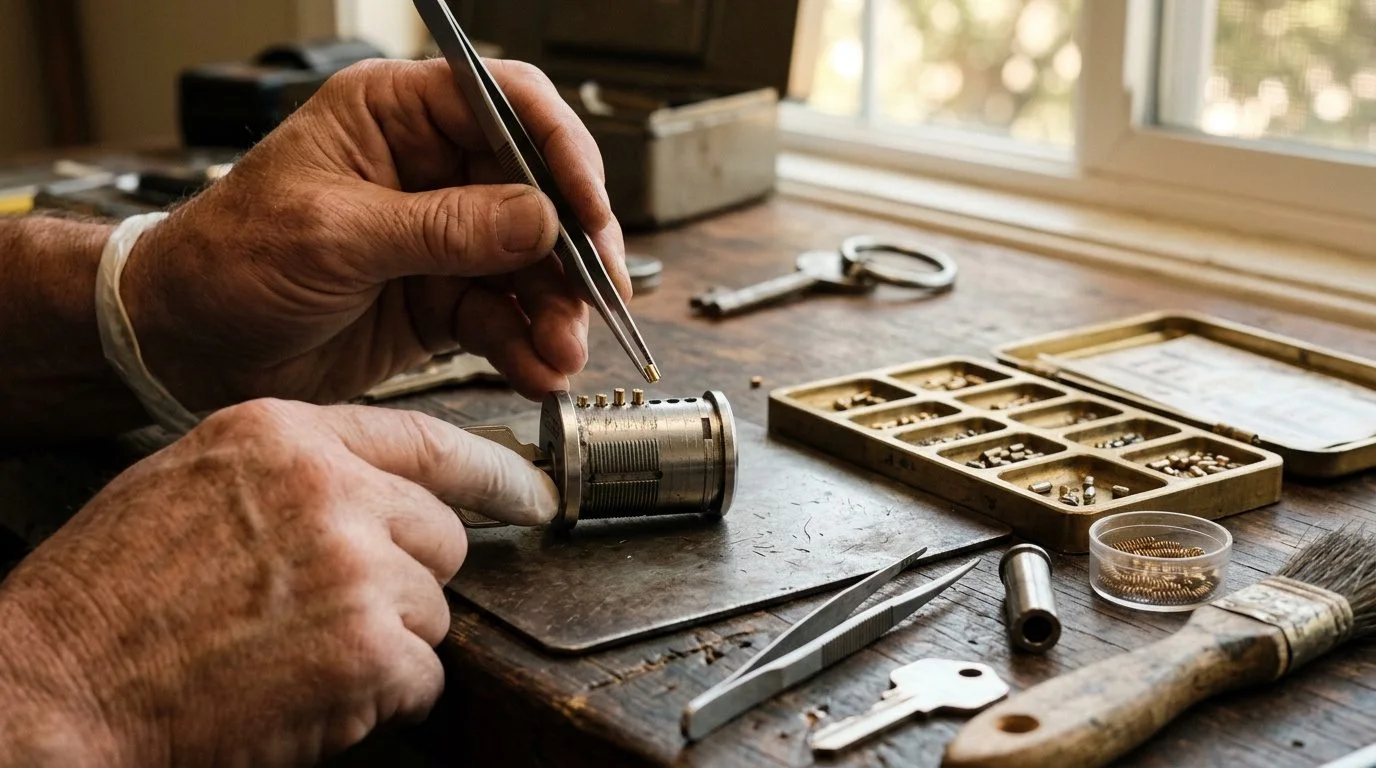
Rekeying is the process of changing the small internal pins (the tumblers) inside a lock cylinder so that the old key no longer fits and a new, different key takes its place. The lock body, the deadbolt, the doorknob, and the strike plate all stay exactly where they are. Only the inner mechanism is reset to a fresh key combination.
Because rekeying reuses your existing hardware, it is usually faster and less expensive than swapping out the whole lock. It is the right move when the lock itself is in good working order and your only goal is to make sure outdated keys stop working. If the hardware is worn, damaged, or you want to upgrade to a different style or higher security grade, replacement is the better path. The signs below help you tell which situation you are in.
What are the clearest signs it is time to rekey?
Most homeowners do not think about rekeying until something changes about who can access their space. The following situations are the strongest signals that your current keys are no longer trustworthy and a rekey is worth scheduling.
- You just moved in. A previous owner, their family, agents, contractors, cleaners, or neighbors may still hold working keys. Rekeying after closing is one of the most common and sensible first steps for a new home.
- A key was lost or stolen. If a key leaves your control and you cannot be certain it was destroyed, the safest assumption is that someone else could use it.
- A roommate, tenant, or housemate moved out. When someone with a key leaves on less-than-friendly terms, or simply forgets to return copies, rekeying resets access cleanly.
- Too many copies are floating around. Over the years it is easy to lose track of how many keys you have handed out to family, dog walkers, house sitters, or service people.
- After a breakup, divorce, or other relationship change. When you want a fresh start on who can enter your home, a rekey gives you a clear line.
- Following a break-in or attempted entry. Beyond repairing any damage, rekeying ensures any keys that may have been copied or taken no longer work.
- You want one key to open several doors. Rekeying can align multiple locks to a single new key, which is handy when you are tired of juggling a crowded keyring.
Should you rekey or replace the lock?
Rekeying and replacement solve different problems, and choosing correctly can save you money. Rekey when your hardware is sound and you only need old keys to stop working, such as after a move, a lost key, or a tenant turnover. It keeps your existing locks and matched finishes intact while resetting access.
Lean toward replacement when the lock is sticking, grinding, rusted, or hard to turn, when it has been physically damaged, when it no longer matches the security level you want, or when you are upgrading to a different design or a smart lock. Replacement is also reasonable if your locks are very old and parts are difficult to source.
A practical middle ground many Bay Area homeowners choose is to rekey the locks that are still in good shape and replace only the ones that are failing, then have everything keyed alike so a single key works throughout. A locksmith can assess each door and tell you honestly which approach fits, and you can request a free quote to get that read on your specific doors.
How much does it typically cost to rekey locks?
Rekeying costs vary with the number of locks, the lock type, the brand, and whether the work is done at a shop or at your door. The figures below are typical industry ranges offered as estimates, not quotes, and your actual price depends on your specific doors and hardware.
As a general guide, rekeying a standard residential lock often falls in the range of roughly $20 to $50 per cylinder for the labor, plus a service or trip charge for mobile visits that commonly runs from about $30 to $100 or more depending on distance and timing. High-security or specialty cylinders cost more because they use restricted keyways and specialized pins. The most accurate way to know your number is a free quote based on a quick look at your locks.
- Per-cylinder rekey labor: commonly around $20 to $50 each (estimate).
- Mobile service or trip charge: commonly around $30 to $100+ depending on location and timing (estimate).
- High-security or restricted-keyway cylinders: higher than standard, varies by system (estimate).
- Keying multiple locks alike: may add a modest per-lock amount but saves you from carrying several keys (estimate).
What should you expect during a rekey visit?
A typical residential rekey is straightforward. A locksmith removes the lock cylinder, replaces the existing pins with a new combination, and cuts fresh keys to match. Each door is then tested with the new key and the old key to confirm the old one no longer works and the new one turns smoothly. For a handful of standard locks, the whole visit is often completed in well under an hour, though more doors or specialty hardware can take longer.
To make the visit efficient, it helps to clear access to each door, note how many doors you want rekeyed, and decide whether you want them keyed alike or kept separate. Ask the technician how many new keys are included and request any extras you need at the same time. When the work is finished, a good locksmith will walk you through what was done and hand over the new keys directly. If you are weighing whether now is the right time, you can request a free quote and describe your situation first.