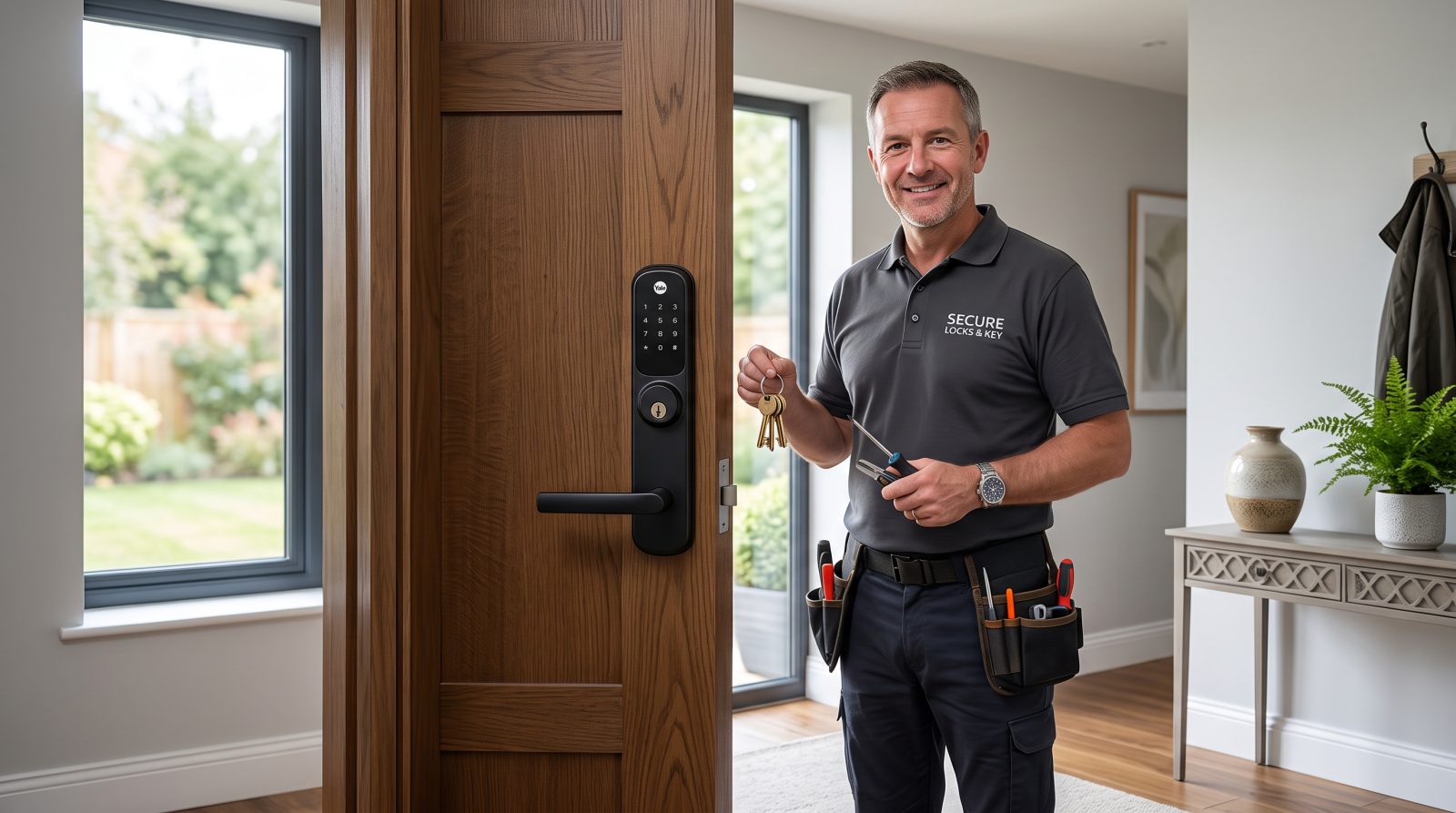
What makes a lock "high-security"?
A high-security lock is defined by a combination of physical hardening and key control, not by a single feature or a brand name. Where a standard residential deadbolt is built mainly to keep an honest door shut, a high-security lock is engineered to slow down and frustrate deliberate attempts to defeat it, while making it difficult for anyone to make an unauthorized copy of your key.
Three things usually separate high-security hardware from a basic lock. First, internal mechanisms designed to resist manipulation methods like picking and bumping. Second, hardened components and reinforced cylinders that make drilling and physical attacks far slower. Third, key control: a restricted or patented keyway so blanks are not sold on the open market and copies generally require authorization through the manufacturer or an authorized dealer.
Many high-security cylinders are independently tested and rated by standards organizations. When hardware carries a published security grade or rating, that rating is set by the testing body, not by us, and the right local locksmith can explain which grade fits your door and your goals.
- Pick and bump resistance built into the cylinder mechanism
- Hardened steel inserts and anti-drill protection
- Restricted or patented keys that resist casual duplication
- Reinforced strike and bolt hardware to resist forced entry
How do pick- and bump-resistant locks actually work?
Pick resistance and bump resistance come from how the lock's internal components are shaped and how many independent things have to line up before the lock will turn. High-security cylinders commonly add a second layer of moving parts or specially profiled components so that the simple, repeatable tricks that open a basic pin-tumbler lock no longer succeed in the same way. The result is a lock that takes far more skill, time, and specialized effort to manipulate.
Bumping is a technique that uses a specially cut key and a sharp tap to momentarily jostle a standard lock open. High-security designs counter this with mechanisms and tolerances that do not respond to that tap the way an ordinary lock does. We keep the explanation at this level on purpose: we describe what these locks resist, not how anyone would attempt to defeat a lock.
On the key side, a restricted keyway means the metal blanks used to cut your keys are controlled. That is what stops someone from quietly copying your house or office key at a kiosk. You stay in control of how many working keys exist and who has them, which matters as much for everyday peace of mind as the hardened metal does.
Who benefits most from a high-security lock upgrade?
High-security locks are a strong fit any time the cost of an unauthorized entry or an uncontrolled key copy is high. Across the Bay Area's mix of single-family homes, condos, flats, and small commercial spaces, the most common reasons people upgrade are about controlling who can get in, not just hardening the door.
Homeowners often choose high-security deadbolts for the main entry, especially after moving into a previously owned home where they cannot account for every key ever made. Landlords and property managers use restricted-key systems to keep tenant turnover from turning into a growing pile of uncontrolled copies. Small businesses, offices, and shared workspaces use them to limit after-hours access and keep a clear handle on who holds keys to sensitive areas.
If you are weighing whether the upgrade is worth it for your specific doors, a local locksmith can walk the property with you and point out where high-security hardware adds real protection versus where a simpler rekey or standard deadbolt is enough.
- Homeowners who want controlled, hard-to-copy keys for the main door
- Buyers of a previously owned home where past keys are unaccounted for
- Landlords and property managers reducing uncontrolled tenant copies
- Small businesses limiting after-hours and sensitive-area access
What does high-security lock installation cost in the Bay Area?
High-security lock pricing varies more than basic lock pricing because the hardware itself ranges widely and because installation depends on your door. As a typical industry estimate, high-security deadbolt hardware often falls somewhere in the range of roughly $150 to $400 or more per lock, and professional installation labor commonly adds something in the range of about $75 to $200, depending on the door and how many locks you are doing at once. These are general ranges to help you plan, not a quote, and your actual price depends on the specific product and your doors.
A few things move the number. The grade and brand of the cylinder, whether your door needs any prep or reinforcement to accept the new hardware, the number of doors you want keyed alike, and whether you are setting up a restricted-key system with registered keys all factor in. Keying several locks to one key on the same visit is usually more efficient than doing them one at a time.
The clearest way to get a real figure is a free quote. Tell us how many doors, what kind of doors they are, and what you are trying to protect, and the locksmith can give you an accurate price before any work begins.
What to expect when we install your high-security locks
A straightforward high-security installation usually starts with a quick assessment of each door. The locksmith confirms the door and frame can properly accept and support the new hardware, recommends a cylinder grade that matches your goals, and reviews how you want your keys set up, including whether multiple doors should share one key.
From there, installation involves removing the existing lock, fitting the new high-security deadbolt and cylinder, and reinforcing the strike and bolt area as needed so the hardened lock is backed by a solid frame. The locksmith then tests the lock through repeated open-and-close cycles to confirm smooth operation, and registers your restricted keys so you have a record of how many working keys exist and who they belong to.
Before finishing, you should get a clear handoff: your new keys, an explanation of how key duplication is controlled for your specific system, and guidance on care and what to do if you ever need additional authorized copies. If you have several doors or properties, the locksmith can plan a keying scheme that keeps things simple to manage.
- Per-door assessment of fit, frame, and the right cylinder grade
- Removal of old hardware and installation of the high-security lock
- Strike and bolt reinforcement so hardened hardware is well supported
- Function testing plus registration and handoff of your restricted keys