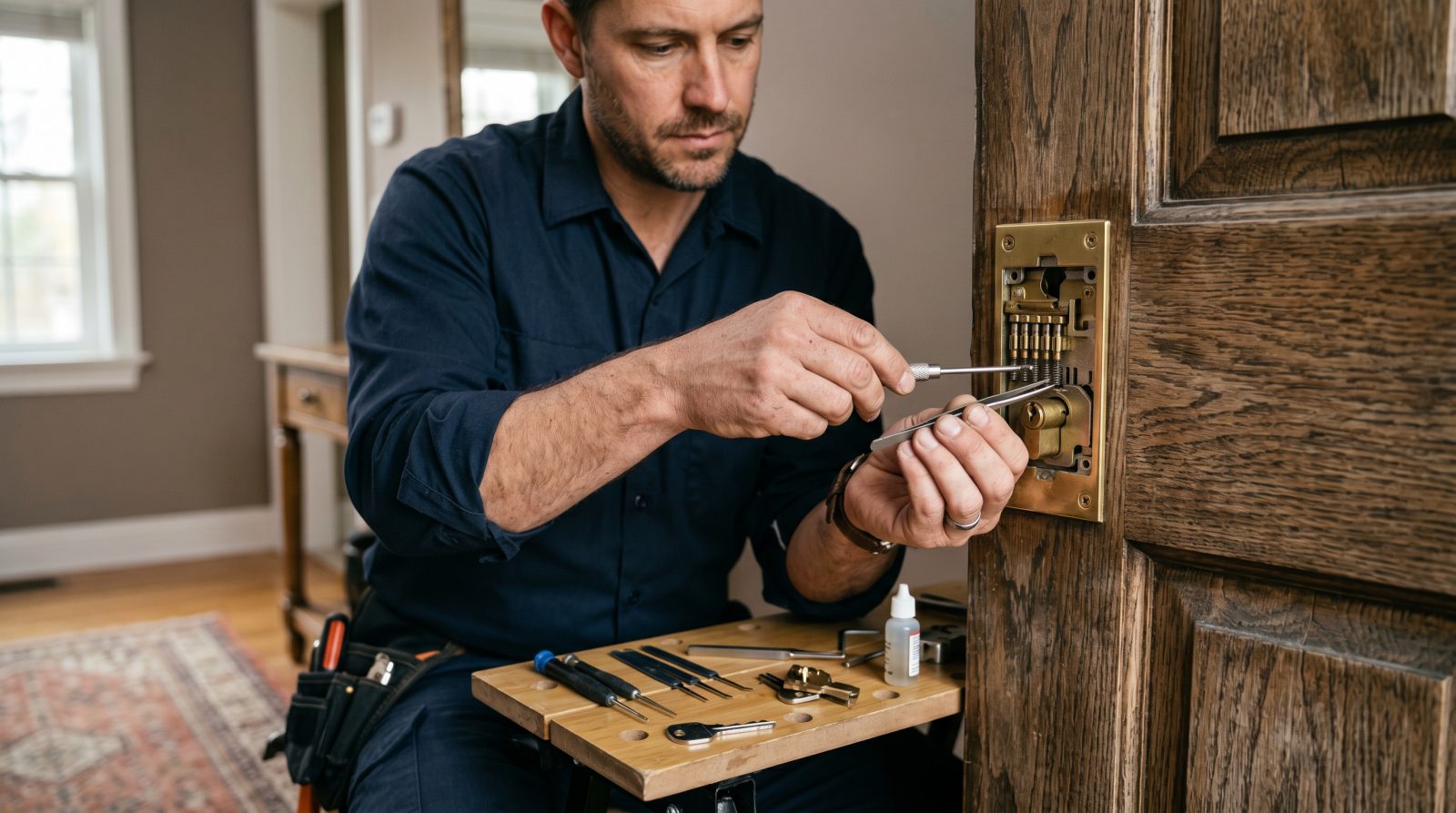
What does lock repair include?
Lock repair covers the diagnosis and correction of a lock that no longer operates the way it should. A locksmith starts by identifying why the lock is failing, then chooses the least invasive fix that restores reliable, secure operation. In many cases that means cleaning and servicing the existing lock rather than installing a new one.
Common repairs fall into a handful of categories. A lock that has become stiff or gritty is often cleaned of dust and old debris and re-lubricated with a dry or graphite-based lubricant designed for locks. A handle or knob that wobbles usually needs its mounting screws and set screws tightened or its internal spindle reseated. A deadbolt that won't throw all the way is frequently a door-alignment problem rather than a lock fault, and is corrected by adjusting the strike plate or relieving where the bolt binds.
Repairs that go deeper into the mechanism include replacing a worn or damaged cylinder, swapping a broken latch or spring, and removing a key that has broken off inside the lock. When internal wear is too far gone for a clean repair, the locksmith will explain that replacement is the more dependable option so you are not paying twice for the same problem.
Why is my lock sticking, loose, or hard to turn?
Locks are mechanical devices with moving parts, and most problems trace back to a few predictable causes. Understanding the likely culprit helps you describe the issue accurately when you request help, and it gives you a sense of whether the fix is likely to be simple.
A few of the most frequent causes of lock trouble:
- Dirt and lack of lubrication: dust, pocket lint, and dried grease inside the cylinder make the pins drag, so the key feels gritty or hard to turn.
- Wear over time: keys and internal pins wear down with thousands of uses, so an old lock or a worn key can slip, stick, or turn unevenly.
- Door and frame movement: seasonal swelling, settling, or loose hinges shift the door so the bolt no longer lines up with the strike plate, making it hard to lock.
- Loose hardware: backed-out mounting screws or a loose set screw cause a knob, lever, or deadbolt thumbturn to feel wobbly or spin freely.
- Weather and corrosion: exterior locks exposed to moisture, salt, or freezing temperatures can corrode or seize, especially on older hardware.
- A failing key: a bent, worn, or poorly cut copy can be the real problem, even when the lock itself is fine.
Lock repair vs. rekey vs. replacement: which do you need?
One of the most useful things a locksmith does on a service call is tell you honestly which of three paths fits your situation, because they solve different problems and carry different costs.
Repair is the right choice when the lock is fundamentally sound but isn't operating smoothly, for example a sticking cylinder, a loose handle, or a misaligned deadbolt. Repair keeps your existing hardware and is generally the most economical route when the lock has plenty of service life left.
Rekeying changes the internal pins so old keys no longer work and a new key does, without replacing the visible hardware. It is the right call when the lock works fine mechanically but you want to control who has access, such as after moving in, losing a key, or a roommate or contractor moving out. Replacement makes sense when the lock is broken beyond a practical repair, badly worn, corroded, or when you want to upgrade to different hardware or a higher grade of lock. A locksmith can walk you through the trade-offs so you choose based on condition and goals, not guesswork.
What happens during a lock repair visit?
Knowing what to expect makes the visit smoother. While every lock is a little different, a typical repair call follows a clear sequence so the locksmith can fix the right thing and confirm it actually works before leaving.
A standard repair visit usually looks like this:
- Diagnosis: the locksmith tests the lock and key, checks door and strike-plate alignment, and inspects the hardware to find the real cause rather than treating a symptom.
- Explanation and estimate: you get a plain-language description of the problem and an estimate before work begins, including whether repair, rekey, or replacement is recommended.
- The fix: depending on the cause, this may be cleaning and lubricating the cylinder, tightening or realigning hardware, adjusting the strike plate, or replacing a worn cylinder, latch, or spring.
- Broken-key removal: if a key has snapped off inside, the locksmith extracts the fragment and checks whether the lock still functions or needs further repair.
- Testing: the lock is operated repeatedly with the key, and the bolt and latch are checked, to confirm smooth, secure operation.
- Final walkthrough: you test the lock yourself and get any maintenance tips to help it keep working well.
How much does lock repair typically cost?
Costs vary by region, the type and grade of lock, the complexity of the problem, and whether any parts need to be replaced, so the only accurate number is a quote from the locksmith for your specific situation. The figures below are typical industry ranges meant to set expectations, not quotes or guaranteed pricing.
As a general guide, simple service work, such as cleaning, lubricating, and minor adjustments, tends to fall at the lower end, often in the range of roughly $75 to $150 for a basic visit and labor. Repairs that require replacing internal parts like a cylinder, latch, or springs typically run higher because of the added parts and labor, and broken-key extraction is usually a modest add-on depending on how the key broke and where.
Several factors move the price within those ranges: the number of locks being serviced, the lock's grade and brand, residential versus commercial hardware, accessibility of the door, and whether the underlying issue turns out to be the lock or the door. Because a misaligned door can masquerade as a broken lock, getting a diagnosis first can sometimes turn an expensive replacement into an inexpensive adjustment. Request a quote so the locksmith can confirm cost before any work starts.
Can you repair smart locks and electronic locks?
Many electronic and smart locks can be serviced, though the work blends traditional locksmithing with the device's electronics. The most common issues are unresponsive keypads, dying or corroded batteries, motors that struggle to throw the bolt, and connectivity or pairing problems, several of which have straightforward fixes.
A large share of smart-lock complaints come down to power: low batteries, poor battery contact, or corrosion at the terminals can cause sluggish or failed operation, and replacing batteries and cleaning contacts often restores normal function. Mechanical parts of a smart lock, such as the deadbolt, latch, and strike alignment, are repaired the same way as on a standard lock. Most consumer smart locks also include a mechanical key override or a backup power option, which a locksmith can use to regain entry while diagnosing an electronic fault.
Some platforms follow shared industry standards, such as the Matter smart-home standard and protocols like Zigbee and Z-Wave, which affect how a lock connects to a hub or app. When a problem is in the firmware, app, or wireless setup rather than the hardware, a locksmith can identify that and point you toward the right manufacturer support or replacement path, rather than charging for hardware work that won't solve a software issue.