First, stay calm and confirm you're really locked out
A lockout feels like an emergency, but panicking can lead to forced doors, broken windows, and bigger repair bills. Before you do anything else, slow down for a minute and confirm the situation. Many lockouts end the moment someone checks the back door or remembers a key in a coat pocket.
Work through the obvious possibilities calmly and in order. The goal at this stage is simply to rule out the easy fixes before you assume you need help.
- Check every entry point: back door, side door, garage entry, patio slider, and ground-floor windows that may be unlocked.
- Search yourself and your bags again: keys, fobs, and access cards hide in jacket pockets, side pouches, and the bottom of a bag.
- Recall your spare: a hide-a-key, or a key with a trusted neighbor, family member, landlord, or property manager can end the lockout immediately.
- For a car, check whether the trunk or a passenger door is unlocked, and whether you have a digital or app-based key on your phone.
- If you rent, your landlord or building manager may keep a master key and can let you in faster than anyone.
Make sure you're safe and check what's inside
Once you know you're locked out, your next priority is safety, not the door. Where you are and what's happening inside changes how urgent the situation is and who you should call first.
Two situations move you from 'inconvenient' to 'call emergency services now.' The first is a person or pet at risk: a child or vulnerable adult alone inside, or a pet in a hot car. The second is an active hazard, such as something left cooking on the stove or running water. In any of these cases, call 911 first; a locksmith is not the right first call when a life is in danger.
- Child, vulnerable person, or pet locked inside a home or hot vehicle: call 911 immediately.
- Stove on, oven running, water flowing, or any fire or flooding risk inside: call 911 first.
- Locked out at night or in an unfamiliar area: move to a well-lit, public spot and wait there rather than lingering at a dark doorway.
- Locked out of your car on a roadway or in traffic: get yourself to the curb or a safe shoulder before doing anything else.
- No urgent risk inside? You have time to choose the calmest, least-damaging way back in.
Try the safe, no-damage ways back in first
If there's no emergency inside, take a few minutes to try the methods that won't cost you anything or risk damage. The right first move depends on whether you rent or own, and whether it's a home, car, or business lockout.
Avoid the tempting 'tricks' you may have seen online. Forcing a door, prying a window, or pushing on a lock can warp the door frame, crack the glass, or damage the lock so it needs full replacement instead of a simple opening. A professional can often open a standard lock without leaving a mark, so the patient route is usually the cheaper one.
- Renters: contact your landlord, leasing office, or property manager first; many keep a spare and can grant access at no charge.
- Homeowners: retrieve a spare from your hide-a-key spot, a trusted neighbor, or a family member who keeps one.
- Car lockout: check for a roadside assistance benefit through your auto insurance, an extended warranty, or a membership program that may cover an unlock.
- Smart locks: try the keypad code, the manufacturer's app, or the backup physical key slot that many smart deadbolts include for exactly this situation.
- Avoid prying doors, breaking windows, or jamming objects into the lock; the resulting damage often costs more to fix than the lockout itself.
When to call a professional locksmith and what to expect
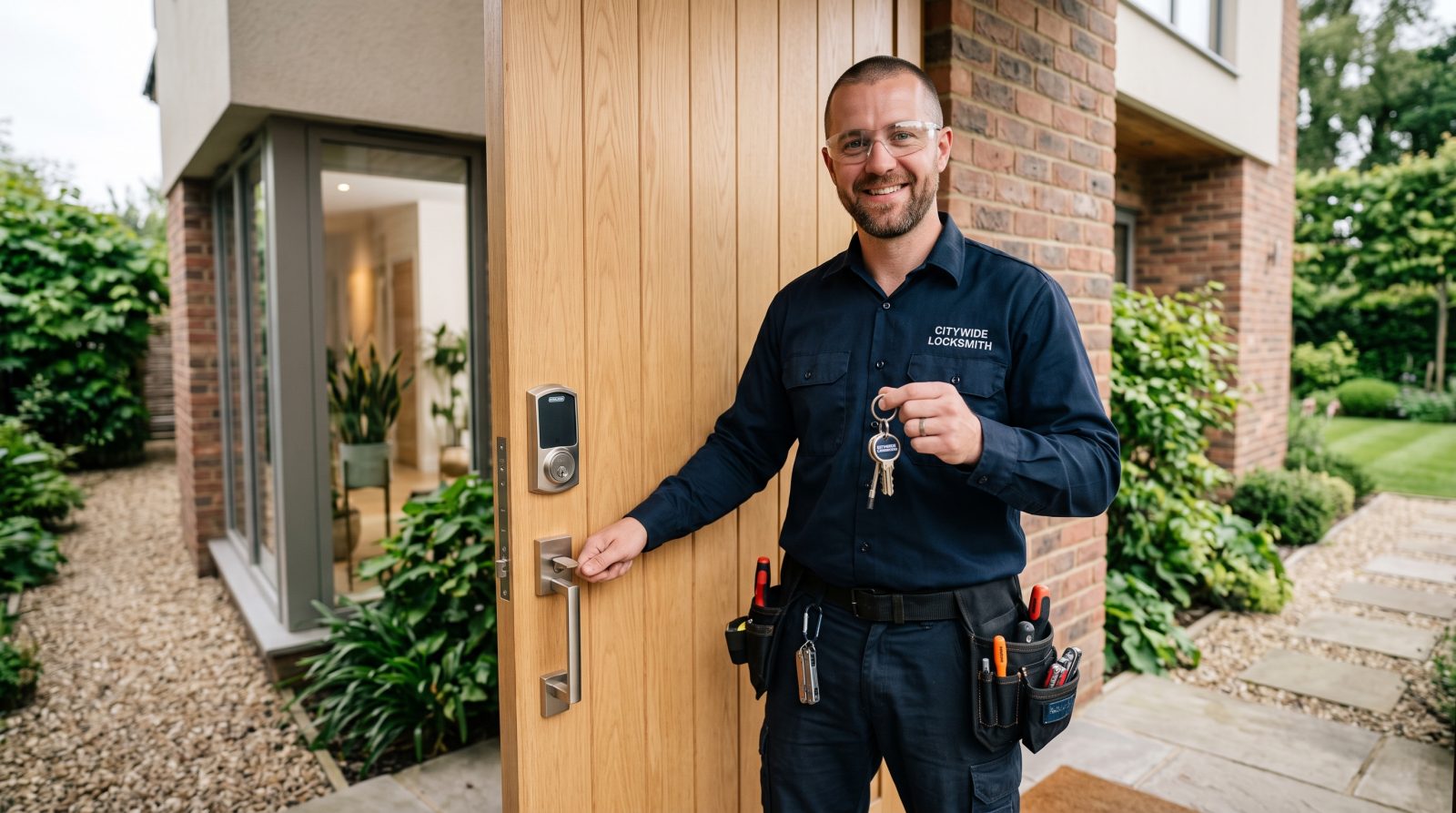
If the safe options don't work, calling a licensed local locksmith is often the fastest way back in without damaging your property. A typical lockout call is straightforward: a technician verifies you're authorized to enter, uses non-destructive entry tools on a standard lock, and gets you back inside, frequently without replacing anything.
A few things help the call go smoothly and protect you from overcharging. Be ready to show that the home, car, or business is yours, since reputable locksmiths ask for proof of ownership or tenancy. Ask for an estimate before work begins, and treat any refusal to give one as a warning sign.
Service costs vary by region, time of day, and the type of lock, so the figures below are typical ranges, not quotes. A residential lockout commonly falls in the range of roughly $75 to $200, and a standard car lockout often lands in a similar band, though high-security or electronic locks, after-hours calls, and rekeying or replacement work typically cost more. The most reliable way to get a real number for your situation is to request a quote for your specific lock and location.
- Expect to verify ownership or tenancy: an ID with a matching address, a lease, a vehicle registration, or confirmation from a landlord.
- Ask for a written or verbal estimate before any work starts, including any after-hours or trip fee.
- Most standard residential and automotive lockouts can be handled with non-destructive entry, meaning the lock keeps working afterward.
- Be cautious of bait pricing: a very low quote on the phone that climbs once a technician is on site is a known scam tactic.
- Confirm the locksmith is licensed where required, and ask whether the work is documented so you have a record of what was done.
- Costs shown are typical ranges only; request a quote for a figure tailored to your lock and location.
Should you replace the lock, rekey it, or just unlock it?
Getting back inside is the immediate goal, but a lockout is also a good moment to think about whether your locks still do their job. There are three different outcomes, and they solve three different problems, so it helps to know which one you actually need.
Unlocking simply opens the door and leaves your existing lock and keys exactly as they were, which is all most lockouts require. Rekeying changes the internal pins of a lock so old keys no longer work and a new key takes over; the hardware stays, but anyone holding a lost or unreturned key is locked out. Replacing swaps the entire lock for new hardware, which makes sense when the lock is worn, damaged, or you want an upgrade such as a deadbolt or a smart lock.
A practical rule of thumb: if your keys are simply on the wrong side of the door, you only need an unlock. If keys are lost, stolen, or in the hands of a former tenant, roommate, or ex, rekeying restores your control without the cost of all-new hardware. If the lock is failing or you want better security, replacement is the path.
- Unlock: you have your key but it's inside; nothing about your security has changed.
- Rekey: keys are lost, stolen, or held by someone who shouldn't have access; the lock stays but old keys stop working.
- Replace: the lock is damaged, worn, or you want an upgrade like a deadbolt or smart lock.
- Moving into a new home: rekeying or replacing every exterior lock is a sensible security step, since you can't know how many copies of the old keys exist.
How to prevent the next lockout
Most lockouts are repeatable human moments, not freak accidents, so a few simple habits can dramatically reduce the odds of standing outside your own door again. The point isn't to be perfect; it's to build one or two backups so a single forgotten key never strands you.
Smart locks can add a modern layer of backup because many support keypad codes, smartphone access, and shared digital keys, often built around common standards like Bluetooth, Wi-Fi, Z-Wave, or Zigbee for home-automation integration. They aren't required to stay lockout-free, but they give you more than one way in. Whatever route you choose, store any spare keys and access codes thoughtfully rather than under the obvious doormat.
- Leave a spare with one trusted person: a neighbor, family member, or friend who lives close by.
- Use a secure lockbox with a code for a spare key instead of an easy-to-guess hiding spot.
- Build a habit anchor: always put keys in the same dish, hook, or pocket so 'where are my keys' has one answer.
- Keep a roadside assistance number or membership handy for car lockouts, and know whether your insurance includes it.
- Consider a keypad or smart lock for at least one entry so a code or app can get you in if a key goes missing.
- Save a trusted local locksmith's contact details before you need them, not during a lockout.