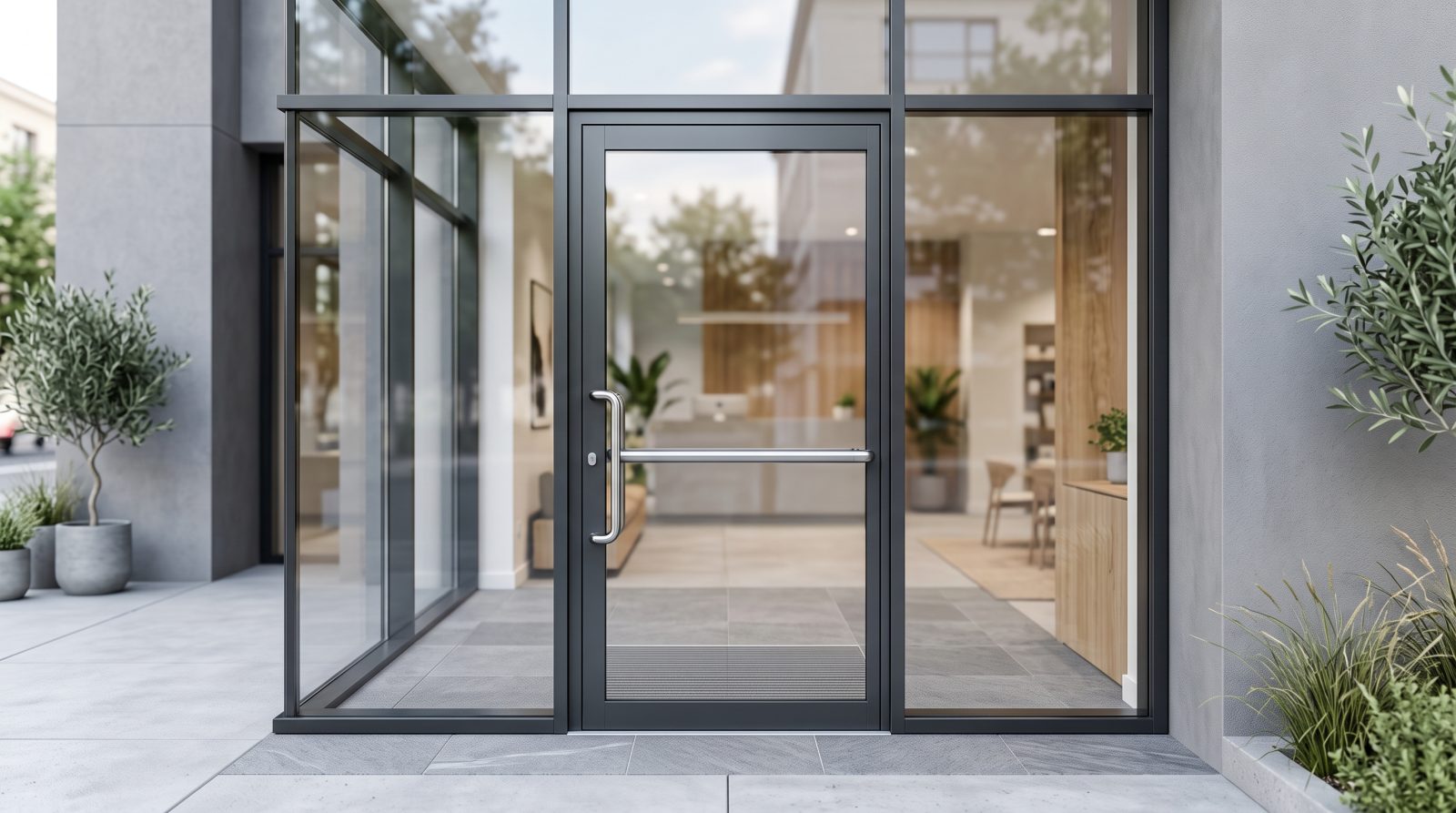
What does a commercial locksmith do?
A commercial locksmith focuses on the access needs of businesses, offices, retail spaces, warehouses, multi-tenant buildings, and other workplaces. The core of the work is controlling who can enter which doors and changing that control as people, roles, and risks change over time. That includes everything from a single rekeyed back-office door to a building-wide keying plan tied to departments and management levels.
Commercial hardware is generally heavier-duty than what you find at home. Businesses commonly use cylindrical or 'bored' locksets, lever handles that meet accessibility expectations, and grade-rated hardware built for frequent use. Many doors also carry code-required egress devices, so a commercial locksmith has to balance security with the ability to get out safely in an emergency.
- Designing and keying master key systems for offices and multi-tenant buildings
- Rekeying locks after staff turnover, lease changes, lost keys, or a break-in
- Installing and repairing panic bars and exit devices on egress doors
- Replacing or upgrading worn commercial locksets, cylinders, door closers, and deadbolts
- Setting up or servicing keypad and electronic access control on entry doors
- Responding to office and storefront lockouts and re-securing doors after damage
How do master key systems work?
A master key system lets one set of locks accept more than one key in a planned hierarchy. Each door has its own change key that opens only that lock, while a master key opens a defined group of doors, and a grand master key can open everything in the system. This means a department lead can hold a key to their area, while facilities or ownership holds a higher-level key that covers multiple areas, without giving everyone a key to everything.
Locksmiths build these systems by carefully assigning pinning combinations inside each cylinder so the right keys turn the right locks. Because the keying chart is the blueprint for who can open what, it should be documented and kept secure. A well-designed system can be expanded as a business grows by adding doors and key levels that fit the existing chart.
Many businesses also choose restricted or patented keyways for master systems. With a restricted keyway, blank keys are not sold over the counter at hardware stores, so copies can only be cut by an authorized provider with permission on file. That makes unauthorized duplication harder and gives the business better control over how many working keys exist.
- Change key: opens one specific lock only
- Master key: opens a defined group of doors (for example, one floor or department)
- Grand master key: opens all doors in the system
- Keying chart: the documented plan of which keys open which locks
- Restricted keyway: limits who can legally cut additional keys
When should a business rekey instead of replace locks?
Rekeying changes the internal pins of an existing lock so old keys no longer work and a new key is required, while keeping the same lock hardware on the door. Replacing a lock swaps out the physical lock body or cylinder entirely. For most businesses, rekeying is the faster and lower-cost choice when the hardware is still in good condition and the goal is simply to invalidate keys that may be in the wrong hands.
Rekeying makes sense after employee turnover, when a tenant moves out, when keys go missing, after a contractor finishes a project, or any time you are unsure how many copies of a key are circulating. Because the existing locks stay in place, a locksmith can often rekey several doors to a single new key or fold them into an existing master system in one visit.
Replacement is the better path when locks are worn, damaged, or outdated, when you want to step up to a higher security grade or a restricted keyway, or when you are switching to electronic access. A commercial locksmith can inspect the current hardware and recommend rekey, repair, or replacement door by door rather than treating the whole building the same way.
Exit devices, panic bars, and code-compliant egress
Exit devices, often called panic bars or crash bars, are the horizontal push bars on doors that let people exit quickly by pushing on the bar instead of operating a knob or thumbturn. They are common on businesses, schools, and assembly spaces because they allow fast, intuitive egress during an emergency, even in a crowd or in the dark. A commercial locksmith installs, adjusts, and repairs these devices so the door stays secure from the outside while always allowing free exit from the inside.
Egress hardware is governed by life-safety codes, and the specifics depend on the building's occupancy type and local code adoption. A core principle across the board is that a person must be able to leave through a required exit without keys, special knowledge, or extra effort. That is why a commercial locksmith pays attention not just to the lock, but to how the whole opening behaves under emergency conditions.
Beyond the bar itself, healthy egress doors depend on supporting hardware: door closers that bring the door back to a latched position, electric strikes or maglocks where access control is integrated, and proper alignment so the latch engages every time. Worn closers, dragging doors, and misaligned strikes are common service calls because they affect both daily use and emergency performance.
- Panic bar / exit device: push-bar hardware for fast emergency exit
- Door closer: returns a door to closed-and-latched after each use
- Electric strike: releases the latch for access control while keeping egress free
- Latch alignment: ensures the door secures reliably on every close
Access control and electronic entry for businesses
Many businesses move beyond brass keys to electronic access control, where doors are opened with a keypad code, a fob or card, or a mobile credential. The advantage is administrative: you can grant access to a new hire, revoke a former employee's credential, and review records of door activity without ever cutting or collecting a physical key. For businesses with frequent turnover or multiple sensitive areas, this can be easier to manage than a traditional key system.
Commercial electronic locks commonly follow recognized standards so different brands of credentials and readers can work together. For mobile and contactless credentials, many modern systems use NFC and Bluetooth, and the industry's Aliro standard was created to improve interoperability between phones, readers, and locks across different vendors. A commercial locksmith can explain which options fit your doors and how they coexist with mechanical keys for backup.
Electronic and mechanical security are not mutually exclusive. A common setup keeps high-traffic public entrances on access control for convenience and auditing, while interior and back-of-house doors stay on a keyed master system. A locksmith helps you decide where each approach earns its cost rather than converting an entire building at once.
Safes, high-security hardware, and emergency service for businesses
Beyond locks and keying systems, Locksmith Near Me also handles safe opening and safe service for businesses that store cash, records, or valuables on-site, and high-security commercial locks built around restricted or patented keyways and higher security grades, so blanks are not sold over the counter and duplication stays controlled.
For lockouts or hardware failures that cannot wait, emergency commercial locksmith service is available within posted business hours: Sun-Thu 9am-9pm and Fri 9am-2pm, closed Saturday. This covers both planned upgrades and lockout situations during those hours, not around-the-clock dispatch.
What does commercial locksmith work typically cost?
Commercial locksmith pricing varies widely by region, hardware grade, number of doors, and the complexity of the job, so the figures below are typical industry ranges meant for planning, not quotes. The most accurate way to budget is to request a free quote based on your actual doors and goals; a locksmith can give a firm estimate after seeing the hardware.
As general guidance, a rekey is usually billed per cylinder, with the first lock costing more than each additional lock keyed alike on the same visit. Master key systems are priced by the number of doors and the depth of the keying hierarchy, plus the cost of cylinders and any restricted keys. Exit device and door closer work depends heavily on whether the hardware is being repaired, adjusted, or fully replaced, and on the grade of device specified.
- Commercial rekey: a typical range of roughly $20 to $50 per cylinder, plus a service or trip fee (estimate, not a quote)
- Master key system: commonly several hundred dollars and up, driven by door count, hierarchy, and hardware
- Exit device / panic bar: typically $150 to $1,000+ installed, depending on grade and whether it is repair vs. replacement
- Access control per door: varies widely with reader, lock, and credential type
- After-hours or emergency calls usually add a premium over standard rates
How to get started with Locksmith Near Me
If you are planning a security upgrade or dealing with a lock problem at your business, the first step is a free quote. Tell us the type of building, how many doors are involved, and what you are trying to accomplish, whether that is a fresh master key plan, a quick rekey after turnover, a sticking panic bar, or a move toward access control. From there, a commercial locksmith can recommend a practical mix of rekey, repair, and replacement.
Locksmith Near Me is your mobile business locksmith serving Santa Clara & San Mateo County - we come to your business, so the work is handled by someone who can service your doors in person. Whether your job is one cylinder or an entire building, requesting an estimate is a straightforward way to a clear plan and a firm price.