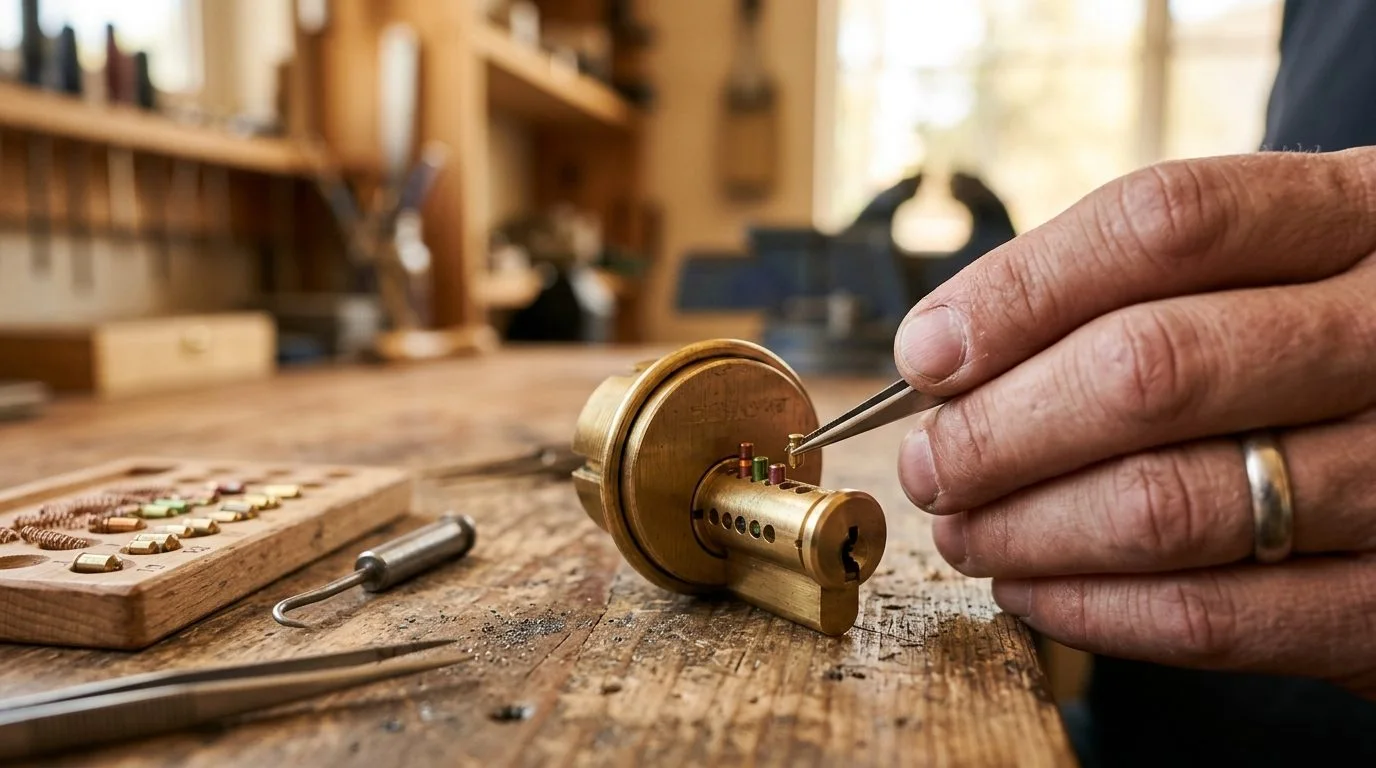
What's the difference between rekeying and replacing a lock?
The two services solve overlapping problems in very different ways. Rekeying keeps your existing lock body and hardware but resets the lock so a new key operates it and previous keys no longer do. Replacing removes the existing lock entirely and installs a brand-new one, which also gives you new keys by default.
Understanding the basics helps you see why one option may cost less than the other, and why a locksmith might recommend a specific path for your door.
- Rekeying: a locksmith adjusts the internal components of the lock cylinder so they match a new key's pattern. The lock body, deadbolt, and exterior look stay the same.
- Replacing: the entire lock unit (cylinder, housing, latch or deadbolt) is removed and a new product is installed. This is the route for upgrading to a different grade, finish, or lock style.
- Both end with you holding working keys that strangers don't have. The difference is whether you're reusing the lock you already own or installing new hardware.
When does rekeying make the most sense?
Rekeying is often the practical choice when the lock hardware itself is sound and your goal is simply to control who has a working key. Because the locksmith reuses your existing lock, it tends to be quicker and less expensive than buying and installing new hardware.
Common situations where homeowners and renters lean toward rekeying include the scenarios below.
- You just moved into a home or apartment and aren't sure how many copies of the old keys may be held by previous occupants, agents, or contractors.
- You lost a key or a key was stolen and you want the missing key rendered useless.
- A roommate, tenant, ex-partner, or former employee moved out and you want to revoke their access without changing the look of the door.
- You have several locks and want them all to open with one key, which a locksmith can often arrange for compatible locks during a rekey.
- The locks work smoothly and aren't damaged, so there's no functional reason to buy new ones.
When is replacing the lock the better choice?
Replacement is often the right call when the hardware can't or shouldn't be reused, or when you want capabilities your current lock doesn't have. Rekeying a worn, broken, or low-grade lock only resets who has the key; it doesn't make the lock stronger or newer.
Consider replacing rather than rekeying in these cases.
- The lock is physically damaged, sticking, corroded, or wearing out, so it's near the end of its service life regardless of who holds a key.
- You want to upgrade the security grade or switch to a different lock type, such as adding a deadbolt or moving to a keypad or smart lock.
- The existing locks are mismatched and you'd like consistent hardware and finish across the property.
- Your locks are very old or use an obsolete design that's hard to service or find parts for.
- You want keyless entry, app control, or temporary access codes, which require new smart-lock hardware rather than a rekey.
Rekey vs. replace: typical cost ranges
The points below describe typical industry patterns to help you plan; they are general guidance, not quotes. Your actual price depends on the lock type, brand, how many locks you have, your location, and current hardware prices. A local locksmith can give you an accurate quote after seeing the specifics.
As a general rule, rekeying tends to cost less per lock than replacement because you aren't buying new hardware. Replacement cost varies widely based on the lock you choose, since a basic deadbolt and a high-end smart lock sit at very different price points. When you have many locks, the labor portion of either service often becomes more economical per lock.
- Rekeying: commonly a per-cylinder labor charge plus a service or trip fee; cost generally scales with the number of locks being rekeyed.
- Replacement: the new lock hardware is the biggest variable, with smart locks and high-security models at the upper end and basic knobs or deadbolts at the lower end, plus installation labor.
- Service or trip fees may apply to either option and can sometimes be combined when work is done in one visit.
- Always confirm whether a quote includes hardware, labor, keys, and any trip fee, so you're comparing the full picture rather than a single line item.
What to expect during a rekey or replacement visit
Both services are routine for a locksmith and are often completed in a single visit for a typical home. Knowing the general steps helps you prepare and ask the right questions.
For a rekey, the locksmith adjusts the lock so it works with a fresh key, then tests that the new key operates the lock while old keys do not. For a replacement, they remove the existing lock, fit and secure the new unit to the door, and verify smooth operation of the latch or deadbolt and the strike alignment.
- Have proof you're authorized to change the locks (for example, ownership or a lease/landlord permission), since reputable locksmiths confirm authority before working on a door.
- Decide in advance how many working keys you need so the right number can be cut on the spot.
- Mention if you'd like multiple locks keyed alike, so one key opens several doors where the hardware allows it.
- After the work, test every new key in every door yourself before the locksmith leaves.
- Keep a record of how many keys exist and who holds them so future access stays under your control.
How to decide quickly: a simple checklist
If you're still unsure, run through a short set of questions. The answers usually point clearly toward rekeying or replacing.
When the picture is mixed, a local locksmith can inspect your doors and recommend a cost-effective path for your goals. You can request a free quote without committing to a particular option.
- Are the locks in good working condition? If yes, rekeying is often enough. If they're worn or damaged, lean toward replacement.
- Is your main concern who has a key, rather than the lock's strength or features? If so, rekeying typically solves it.
- Do you want new features like keyless entry or a higher security grade? That generally requires replacement.
- Do you have many locks and want them to share one key? Keying them alike during a rekey is usually the efficient choice.
- Do the current locks look outdated or mismatched and you want a fresh, uniform setup? Replacement delivers that.